
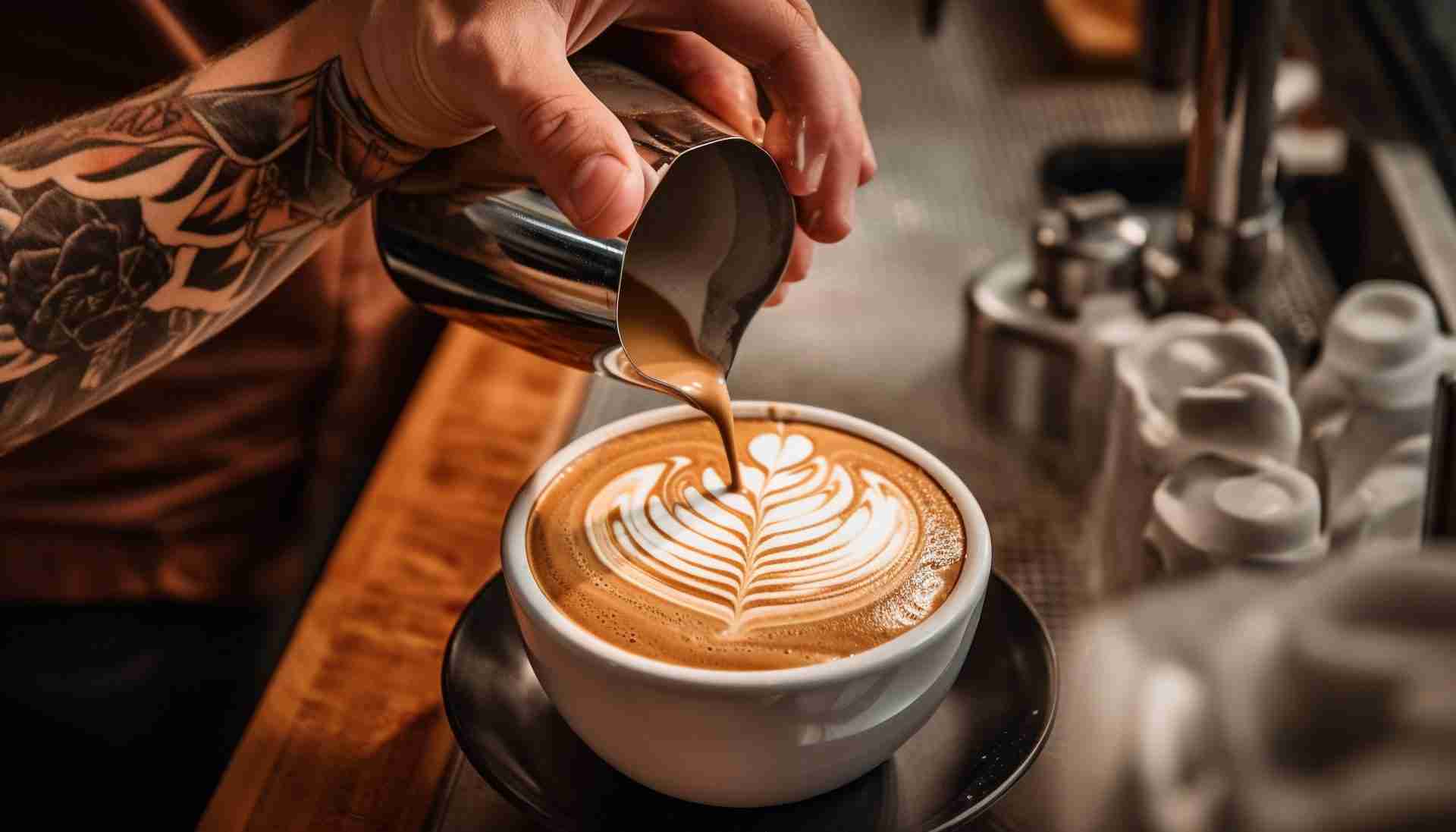
There’s something quietly delightful about being handed a latte with a perfect heart, rosetta, or tulip floating on top. Before you even take a sip, the drink already feels special—almost like it was made just for you.
That’s the magic of latte art. It’s more than decoration; it’s a blend of craftsmanship, timing, and care that turns a simple coffee into an experience. For many coffee lovers, latte art is often the first sign that a café pays attention to detail—and that the drink in your hands was made with intention.
At places like Abide Coffeehouse, latte art is part of a larger commitment to thoughtful coffee-making. But what exactly is latte art, and how do baristas create those beautiful designs on the surface of your drink? Let’s break it down.
What Is Latte Art?
Latte art is the practice of pouring steamed milk into a shot of espresso in a way that creates visible patterns or designs on the surface. While it may look purely artistic, it’s actually a precise technique rooted in coffee science.
Two key elements make latte art possible:
- Espresso crema: the golden, slightly foamy layer on top of espresso that acts as the “canvas”
- Microfoam milk: steamed milk with tiny, silky bubbles that behaves like liquid paint
When these two are combined correctly, the milk and espresso interact in a way that allows shapes to form naturally during the pour.
The important thing to remember is that latte art doesn’t change the flavor of your coffee. Instead, it enhances the experience—adding visual beauty and a sense of care to every cup.
Why We Love Latte Art
Latte art has become a beloved part of modern coffee culture, and not just because it looks good on social media. There are deeper reasons why coffee lovers are drawn to it.
1. It feels personal
Every pour is slightly different. Even if a barista tries to make the same design twice, subtle variations in movement and flow make each cup unique. That individuality makes the drink feel handcrafted and personal.
2. It signals quality
A well-executed latte art design often reflects a barista’s skill. To achieve smooth, balanced milk and a stable espresso base takes practice and attention to detail.
3. It enhances the experience
Watching latte art being poured can be almost meditative. It builds anticipation and turns a simple coffee order into a small moment of enjoyment.
4. It connects people to café culture
Latte art has become a symbol of specialty coffee worldwide. It represents care, creativity, and the modern café experience—something you’ll often notice at thoughtful coffee shops like Abide Coffeehouse.
The Science Behind Latte Art
While latte art may look effortless, there’s a lot of science happening behind the scenes.
Espresso matters first
A good espresso shot is essential. It needs to have a rich, stable crema that can hold shape and contrast against the milk.
Milk chemistry is key
Milk contains proteins and fats that change when heated and aerated. When steamed correctly, it becomes microfoam—smooth, glossy, and almost paint-like.
Temperature control
Milk should typically be steamed between 140°F and 155°F (60°C–68°C). Too cold, and it won’t blend well. Too hot, and the texture breaks down, creating dull foam instead of silky microfoam.
Texture is everything
If milk is over-frothed, it becomes bubbly and unstable. If done right, it flows like wet paint—perfect for forming designs.
Understanding these elements helps explain why latte art takes practice rather than luck.
How Latte Art Is Made: Step by Step
Creating latte art is a balance of technique, timing, and feel. Here’s how baristas do it:
Step 1: Pull a quality espresso shot
The base matters. A fresh, well-extracted shot with rich crema sets the stage for clear contrast and structure.
Step 2: Steam the milk properly
Air is introduced briefly at the beginning to create volume, then the milk is heated while being swirled to develop a silky microfoam. The goal is smooth, glossy milk with no visible bubbles.
Step 3: Begin the pour
The milk is poured from a height at first to blend with the espresso. This creates a unified base.
Step 4: Start forming the design
As the cup fills, the pitcher is lowered closer to the surface. This is where shapes begin to appear. Subtle wrist movements control the flow and pattern.
Step 5: Finish the design
A final motion—often a gentle pull-through—completes the shape, defining hearts, leaves, or layered tulips.
The entire process happens in seconds, which is part of what makes latte art so impressive to watch.
Popular Latte Art Designs
Some designs are more common than others, especially for beginners:
- Heart: The simplest and most foundational design
- Rosetta: A leaf-like pattern created with a gentle side-to-side motion
- Tulip: A layered design that stacks milk shapes on top of each other
- Swan (advanced): A complex pattern combining multiple movements
Each design builds on the same core skills but increases in difficulty as control improves.
Common Mistakes to Avoid
Even experienced baristas continue refining their latte art technique. Some common challenges include:
- Milk that is too foamy or too airy
- Overheated milk that loses its silky texture
- Weak or inconsistent espresso crema
- Pouring too quickly or with poor angle control
- Rushing the process instead of focusing on flow
The good news? Latte art improves with repetition. It’s a skill built through practice, not perfection.
Latte Art in Coffee Culture
Today, latte art is more than a barista skill—it’s part of global coffee culture. It appears in competitions, café menus, and social media feeds worldwide.
It also plays a big role in how people experience cafés. A beautifully crafted latte often sets the tone for the visit, signaling that care went into every detail.
At coffee shops like Abide Coffeehouse, latte art reflects a broader philosophy: coffee is not just a drink, but a crafted experience meant to be enjoyed slowly and intentionally.
Can You Try Latte Art at Home?
Yes—you don’t need to be a professional barista to start experimenting.
All you need is:
- A way to make strong coffee or espresso
- A milk frother or steam wand
- Some patience and curiosity
Begin with simple heart shapes before moving on to more advanced designs. Even if your first attempts look more abstract than artistic, that’s completely normal.
Many coffee lovers find that practicing latte art deepens their appreciation for what baristas do every day.
Final Thoughts: More Than Just a Pretty Cup
Latte art is a small detail that makes a big difference. It combines science, technique, and creativity in a way that turns everyday coffee into something memorable.
It reminds us that coffee is not just about caffeine—it’s about care, craft, and connection.
So the next time you’re handed a beautifully designed latte, take a moment before stirring it in. That little piece of art floating on top is the result of skill, timing, and attention—something coffee lovers everywhere can appreciate.
And at places like Abide Coffeehouse, that same attention to detail is what makes every cup worth savoring.
Don’t forget to visit our tea shop, Teasperience.
